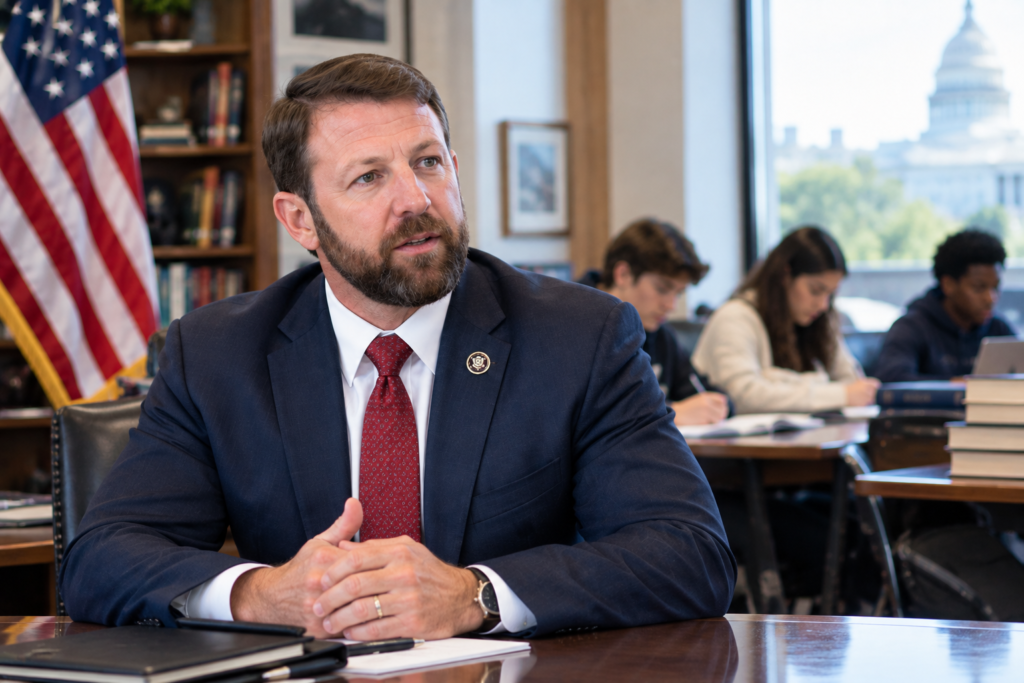
Markwayne Mullin’s educational background provides useful context for understanding the early stages of his career and the experiences that shaped his professional path. Before entering national politics, Mullin developed experience in business, skilled trades, and public service. His education was connected not only to formal schooling but also to practical learning and career development. The story of Markwayne Mullin education includes his high school years, college studies, and the practical knowledge he gained while building a career outside government. This article examines his academic background, training, early professional development, and how education contributed to his later work in public life.
Early Education and School Years
Markwayne Mullin was born in Tulsa, Oklahoma, in 1977 and grew up in Oklahoma. His early education took place within the state’s school system, where he completed his basic and secondary education.
During his school years, Mullin developed an interest in practical work and business. His later career would demonstrate an emphasis on hands-on experience, entrepreneurship, and developing skills that could be applied directly in professional settings.
High school education provided the foundation for his later studies and professional activities. Like many students who eventually enter business or public service, his educational development did not end with classroom learning. His experiences outside traditional academics also became important parts of his career.
High School Background
Mullin attended East Central High School in Tulsa, Oklahoma. He graduated from high school before continuing his education at the college level.
High school was an important period in establishing the basic academic foundation he would later use in business and professional activities. It also preceded his involvement in areas such as construction, plumbing, and entrepreneurship.
His career illustrates how education can take different forms. Formal schooling supplied fundamental academic knowledge, while professional experience allowed him to develop practical abilities.
College Education
After high school, Mullin attended Oklahoma State University Institute of Technology, commonly known as OSUIT, in Okmulgee, Oklahoma.
OSUIT has a strong focus on applied education and technical training. Its programs emphasize career-oriented learning, technology, and practical skills. This type of educational environment can be particularly relevant for students interested in technical occupations and business-related careers.
Mullin studied at OSUIT and developed knowledge that complemented his practical interests. His education was not centered exclusively on traditional academic theory. Instead, it was connected to technical and professional development.
This background became relevant to his later career as an entrepreneur.
Business and Practical Learning
Education was only one part of Mullin’s professional development. He also gained substantial experience through hands-on work.
Mullin became involved in the plumbing industry and eventually built a successful business. His experience in the trades gave him practical knowledge about operations, customers, employees, finances, and business management.
This combination of formal education and practical experience is an important part of understanding his career.
Technical education can provide students with specialized knowledge, while direct work experience can help them apply that knowledge in real-world situations. Mullin’s career followed a similar path.
His business activities eventually expanded beyond individual trade work, giving him experience as an entrepreneur and employer.
Education and Entrepreneurship
Mullin’s professional life demonstrates a connection between technical education and entrepreneurship. After developing experience in the plumbing industry, he established Mullin Plumbing, a company that grew into a substantial business.
Running a business requires skills that may come from several sources. These can include technical knowledge, financial planning, communication, leadership, customer service, and organizational management.
While formal education can provide a foundation, entrepreneurs often develop additional abilities through experience. Mullin’s career reflects this combination.
His business background later became part of his public identity when he entered electoral politics.
From Business to Public Service
Mullin entered public life after establishing his business career. He was elected to the U.S. House of Representatives in 2012, representing Oklahoma’s 2nd Congressional District.
His transition from business to politics illustrates how professional experience can influence a person’s approach to public service.
His background was different from that of politicians who spend most of their careers in government or academia. Instead, Mullin entered Congress after years of working in the private sector.
Education therefore represents one component of a broader professional story. His formal studies, technical experience, entrepreneurship, and later political work all contributed to his career development.
Education and Congressional Career
Mullin served in the U.S. House before later moving to the U.S. Senate. His educational and professional experiences became part of the background voters considered when evaluating his qualifications for public office.
A person’s education can influence the skills and knowledge they bring into government, but education alone does not determine how an elected official performs.
In Mullin’s case, his career before Congress included significant business experience. His public career consequently combined technical training, entrepreneurship, and political service.
This makes his educational background particularly relevant to people researching nontraditional paths into national politics.
Technical Education as a Career Foundation
Mullin’s educational path also demonstrates the importance of technical and career-focused education.
Traditional four-year university education is only one route toward professional success. Technical institutions such as OSUIT provide programs designed to prepare students for specific occupations and industries.
Career-focused education can help students develop practical abilities while also preparing them for employment or entrepreneurship.
Mullin’s experience offers an example of how a technical educational background can eventually lead to business ownership and public service.
For students considering similar paths, his career demonstrates that education and professional experience can develop together over time.
The Role of Work Experience
One of the notable aspects of Mullin’s background is the role played by work experience.
Education provided a foundation, but his professional career required continued learning. Business owners regularly encounter challenges involving hiring, financial management, regulations, customer relationships, competition, and long-term planning.
These experiences can become a form of practical education.
Mullin’s transition from the plumbing business into politics required another set of skills, including communication, policy analysis, public speaking, campaigning, and legislative work.
Consequently, his overall educational story extends beyond the degrees or institutions he attended.
Education and Leadership Development
Leadership can develop through many different experiences. Classroom education can introduce concepts and analytical skills, while employment and entrepreneurship can provide opportunities to make decisions and manage responsibilities.
Mullin’s career included both types of experiences.
His technical and business background exposed him to workplace leadership before he entered elected office. His later political career placed him in a different leadership environment involving constituents, legislation, government agencies, and national policy.
Understanding this progression helps explain why educational biographies often include professional experience alongside formal academic credentials.
Continuing Learning Through a Political Career
Entering politics requires learning about subjects that may not be part of a person’s original education.
Members of Congress must work with legislation, federal agencies, budgets, constitutional issues, international affairs, economic policy, and many other areas.
Mullin’s transition from entrepreneur to federal legislator therefore involved substantial learning beyond his earlier technical education.
Political careers can require continuous education because public officials encounter new policy questions and changing circumstances throughout their service.
Why Markwayne Mullin’s Education Is Notable
Mullin’s educational background is notable because it follows a practical and career-oriented route rather than a conventional academic-to-government pathway.
His experience includes high school education, technical college study, trade experience, entrepreneurship, and political service.
For students and career researchers, this background demonstrates that professional development can happen through multiple stages.
A technical education can lead to employment, employment can lead to entrepreneurship, and entrepreneurial experience can eventually become part of a career in public service.
The relationship between education and career is therefore not always linear.
Education, Skills, and Career Development
The broader lesson from Mullin’s background is that education can be viewed as a continuing process.
Formal education establishes foundational knowledge. Technical training develops occupational skills. Work experience provides opportunities to apply those skills. Entrepreneurship adds management and leadership responsibilities. Public service introduces another layer of professional learning.
Each stage can contribute to the next.
Mullin’s career demonstrates how these different forms of learning can combine over several decades.
Final Thoughts
Markwayne Mullin’s educational background includes his schooling in Oklahoma and studies at Oklahoma State University Institute of Technology. His career development also involved extensive practical experience in the plumbing industry and business ownership. These experiences preceded his transition into elected office and became an important part of his professional biography. His story illustrates how technical education, hands-on training, entrepreneurship, and continued learning can contribute to a career that eventually moves into national public service.
Frequently Asked Questions
Where did Markwayne Mullin go to high school?
Markwayne Mullin attended East Central High School in Tulsa, Oklahoma.
Where did Markwayne Mullin attend college?
Mullin attended Oklahoma State University Institute of Technology in Okmulgee, Oklahoma.
What did Markwayne Mullin study?
His education included technical and career-focused study at Oklahoma State University Institute of Technology, which complemented his later work in the plumbing and business industries.
Did Markwayne Mullin have a career before politics?
Yes. Before entering elected office, Mullin worked in the plumbing industry and became a business owner.
How did education influence Markwayne Mullin’s career?
His technical education provided a foundation for practical professional work, while his subsequent business experience helped develop additional skills in management, entrepreneurship, and leadership.
Did Markwayne Mullin attend a traditional four-year university?
His higher education included study at Oklahoma State University Institute of Technology, a career-focused institution rather than following a conventional four-year university pathway.
What is Markwayne Mullin known for?
Markwayne Mullin is an American politician and businessman who served in the U.S. House of Representatives and later became a U.S. senator from Oklahoma.
Is technical education useful for entrepreneurship?
Technical education can provide specialized skills that may support employment or entrepreneurship. Business owners can also develop management and leadership abilities through practical experience.
| Read Also : Guild Education: A Complete Guide to |